


 Edible Mushrooms
 3. They smell of a mixture of apricots and squash.
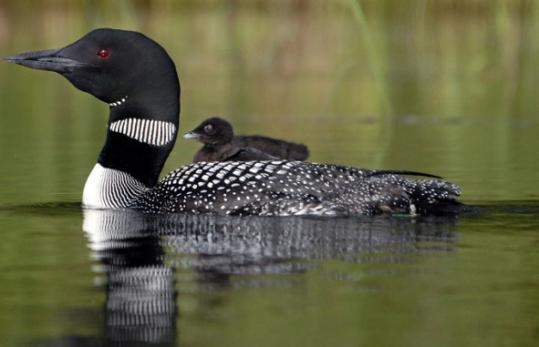 (Derrick Z. Jackson/Globe Staff)
 THE CALL of the loon was particularly haunting this month against a sad backdrop. Biologists in New Hampshire discovered four loons dead from lead poisoning. The deaths were disturbing for many reasons. One is that the summer is only half over and one more lead-killed loon will exceed the annual average for the state. Another is that the loons came from four different bodies of water - an indication that the lead problem is widespread. Still another was that two loons died from tackle the state banned eight years ago: lead sinkers or jigs one inch or smaller. Worst of all, the other two loons died from lead jigs larger than an inch, jigs exempted from the ban on the premise they were too big for loons to ingest.
It is another call to get the lead out of lakes and streams.
New Hampshire, Maine, Vermont, and New York have all banned the sale or use of small lead tackle. Massachusetts currently bans lead on its primary loon nesting waters of the Quabbin and Wachusett reservoirs. This spring, the state Senate passed legislation sponsored by Senator Robert Antonioni of Leominster that would give wildlife officials the power to issue a statewide ban on small lead tackle. The bill awaits action in the House.
Lead restrictions have been met with some resistance from angler industry lobbyists, as the metal remains popular for its cheap cost, density, and malleability. But more and more nontoxic gear is becoming available. In fact, one of the "best-of-show" products at this month's international sports-fishing trade convention in Las Vegas was a stone sinker. That would be perfect for loons - if they have to ingest a lost sinker at all - since a primary way they take in lead sinkers is with the pebbles their beaks scoop up from lake bottoms to help digest fish.
Industry complaints about lead bans have to be weighed against the fact that the call of the loon cannot be taken for granted, with about 4,000 birds in Maine, 528 in New Hampshire, and only a few dozen in Massachusetts. Massachusetts should enact a statewide ban on lead, so the call of the loon is merely beautiful, not haunting.


